Matcha · Hot · 3 min
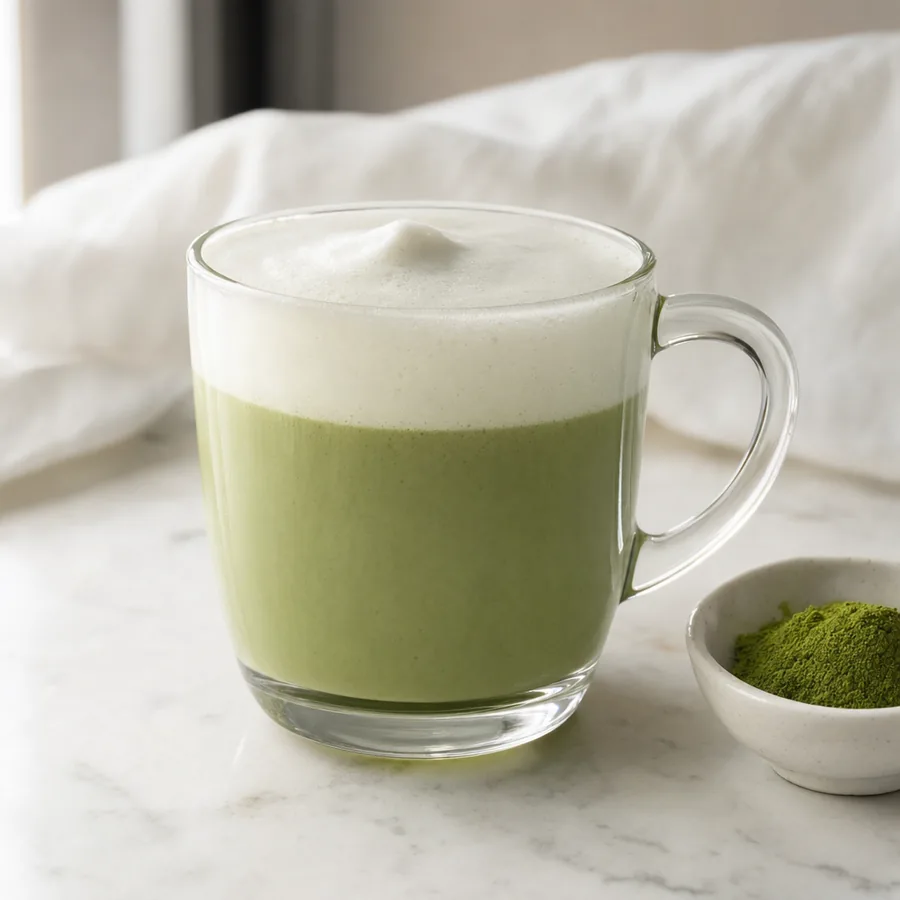
How to Make a Hot Matcha Latte
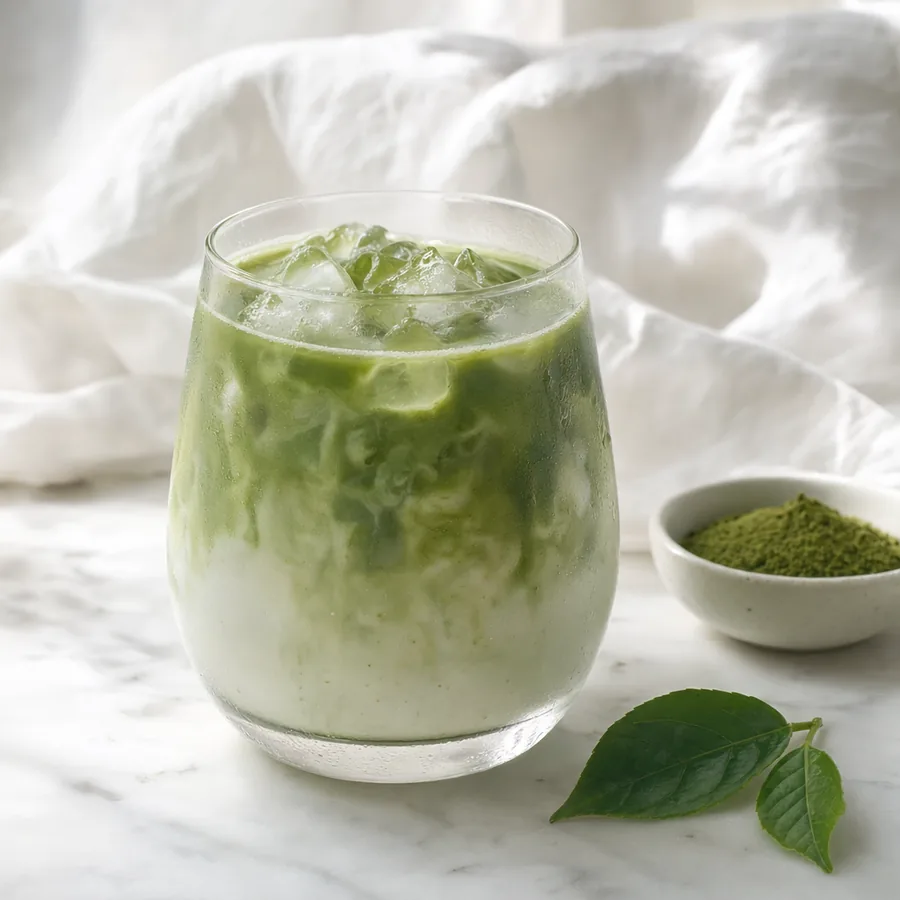
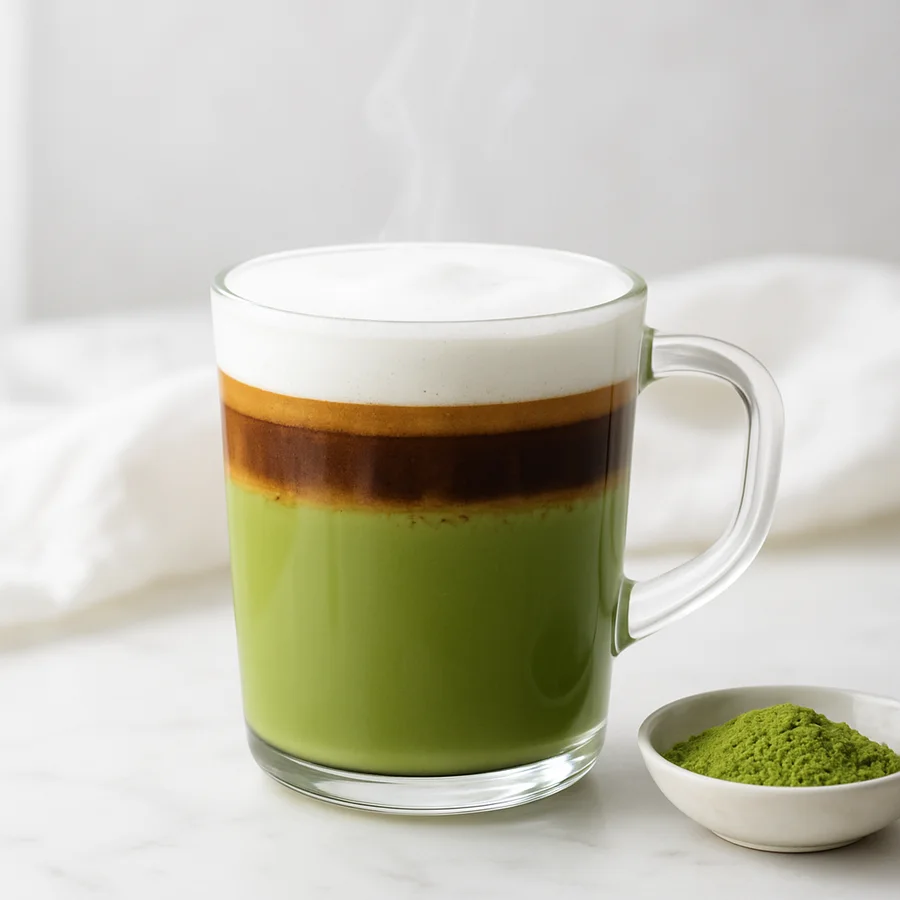
Matcha's crowd-pleaser — whisked to a smooth paste and folded into steamed milk for a creamy, naturally sweet, steady-lift latte.
- Serves
- 1 (10 oz)
- Time
- 3 min
- Skill
- Easy
- Gear
- Whisk / frother + steamed milk
Ingredients
- 2 g (1 tsp) matcha, sifted
- 30 ml hot water (70–80°C)
- 180 ml steamed milk
- Optional: honey
Method
- 1
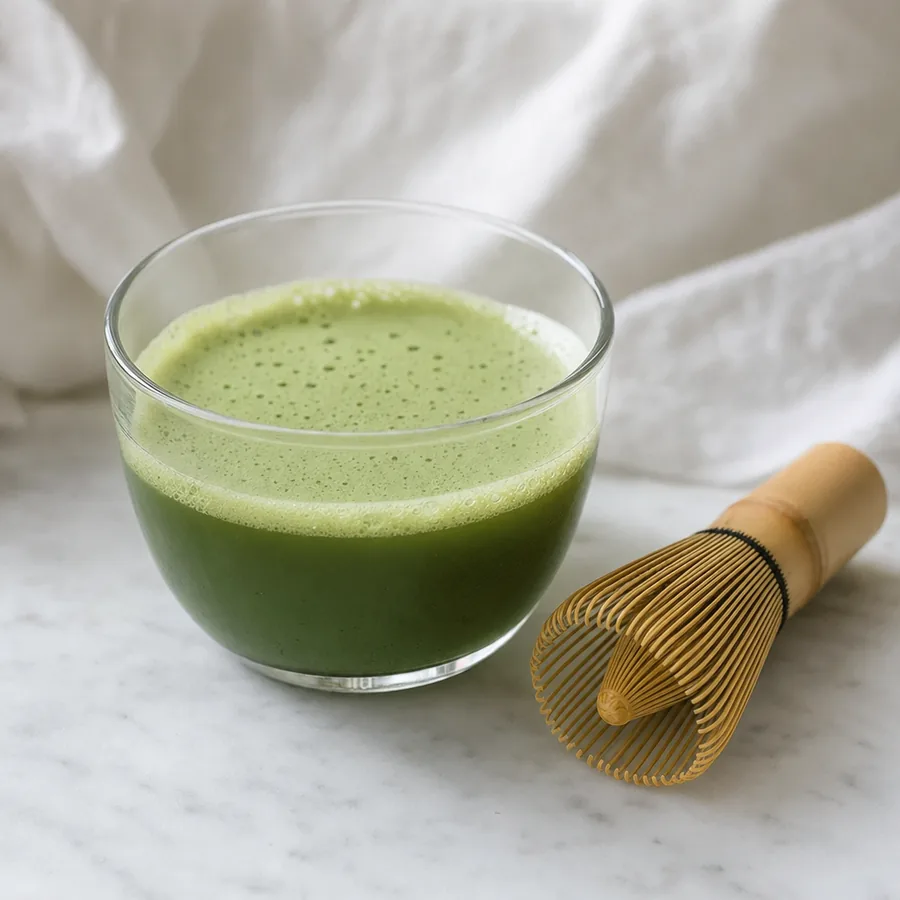
Sift the matcha and whisk it with the 30 ml of hot water into a lump-free paste.
- 2
Steam or froth your milk until hot and glossy.
- 3
Pour the matcha into a cup, then add the milk, holding back the foam.
- 4
Spoon the foam on top and sweeten to taste.
Best results: Always make a smooth paste with a little water first — milk alone won't dissolve the clumps.
Nutrition & caffeine
Nutrition & caffeine
Per serving · 10 oz · with whole milk
Calories
120
Sugars
9 g
Caffeine
~65 mg
Milk
Sweetener
Caffeine about 65 mg · usually 40–90 mg
Published researchAbout 16% of the 400 mg a day the U.S. FDA says healthy adults can generally have. Less if you are pregnant, sensitive to caffeine, or on medication — ask your doctor.
- Total fat
- 6 g
- Saturated fat
- 3.5 g
- Total carbohydrate
- 10 g
- Dietary fibre
- less than 1 g
- Total sugars
- 9 g
- Protein
- 6 g
- Sodium
- 80 mg
- Calcium
- 220 mg
Contains: milk.
Where these numbers come from
- Moksha Private Reserve A23 (café grade)Published research
Kochman et al., Molecules 2021, 26, 85 — matcha contains 18.9–44.4 mg caffeine per gram
Caffeine is the published range; the typical value is its midpoint. Calories and macros are typical values for whole-leaf green-tea powder (about 6 kcal in a 2 g serving) and are estimates — matcha is unsweetened, so it adds no sugar.
- Whole milkUSDA reference values
Calculated from this recipe's ingredients and amounts. Your drink will vary with the exact measures, brands and brew. Not a lab analysis, and not medical advice.
Why it works
Matcha delivers caffeine differently than coffee: paired with the amino acid L-theanine, it gives a calmer, longer 'steady lift' without the spike-and-crash. The one technique that separates a good matcha latte from a clumpy one is whisking the powder into a paste with a little hot water first — milk's fat and proteins coat the particles and stop them dissolving if you skip it.
Frequently asked
What grade of matcha is best for a latte?
A café grade like our Private Reserve A23: bright and smooth, and it keeps its colour and flavour in milk. It doesn't need to be top koicha grade, but cheap ingredient-grade matcha tastes dull and bitter once milk is added.
Why is my matcha latte clumpy?
You added milk to dry powder. Always whisk the matcha into a smooth paste with a splash of hot water first — cold or hot milk alone can't break the clumps.
Keep brewing