Matcha · Hot · 2 min
How to Make a Matcha (Usucha)
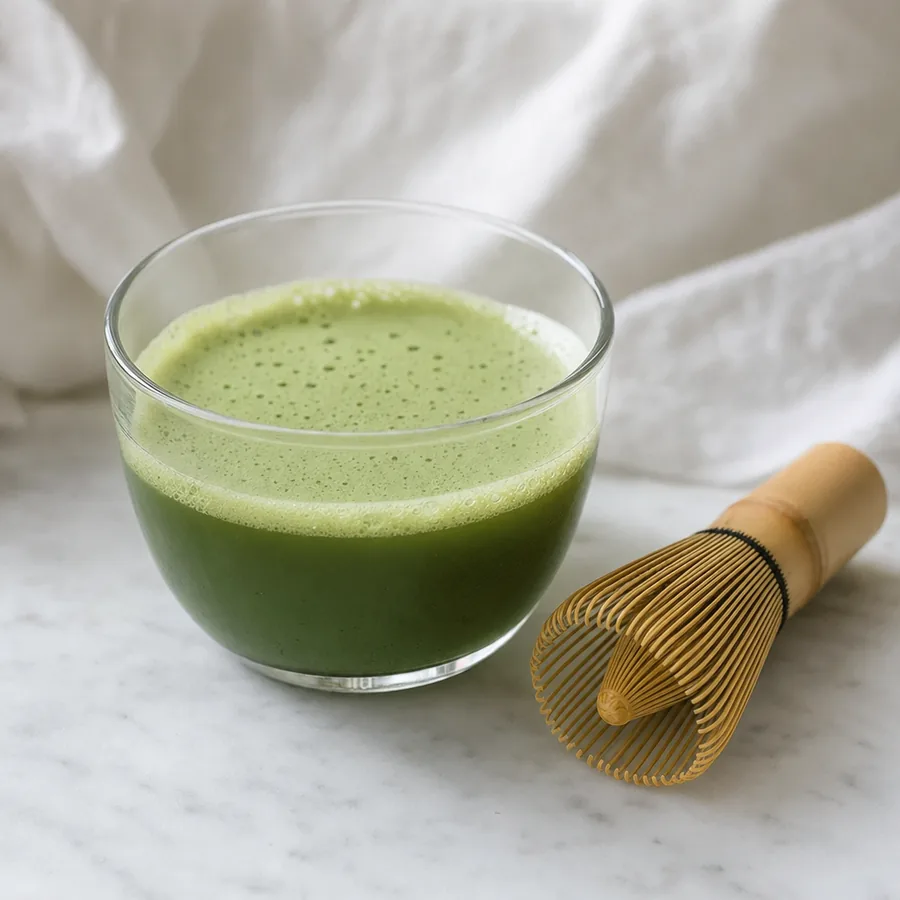
The traditional way — sifted matcha and just-under-boiling water whisked to a fine jade foam. Grassy, sweet, and clean.
- Serves
- 1 (2.5 oz)
- Time
- 2 min
- Skill
- Medium
- Gear
- Chawan bowl + bamboo whisk
Ingredients
- 2 g (1 tsp) ceremonial matcha, sifted
- 60–70 ml water at 70–80°C / 160–175°F
- Bamboo whisk (chasen)
Method
- 1
Sift 2 g of matcha into a warm bowl to remove clumps.
- 2
Add a splash of the 70–80°C water and whisk to a smooth paste.
- 3
Add the rest of the water.
- 4
Whisk briskly in a W or M motion (not circles) for 15–20 seconds until a fine foam rises.
Best results: Never use boiling water — above ~80°C scalds matcha bitter. The zig-zag whisk motion is what builds the foam.
Nutrition & caffeine
Nutrition & caffeine
Per serving · 2.5 oz
Calories
5
Sugars
0 g
Caffeine
~65 mg
Sweetener
Caffeine about 65 mg · usually 40–90 mg
Published researchAbout 16% of the 400 mg a day the U.S. FDA says healthy adults can generally have. Less if you are pregnant, sensitive to caffeine, or on medication — ask your doctor.
- Total fat
- 0 g
- Saturated fat
- 0 g
- Total carbohydrate
- less than 1 g
- Dietary fibre
- less than 1 g
- Total sugars
- 0 g
- Protein
- less than 1 g
- Sodium
- 0 mg
- Calcium
- 10 mg
Where these numbers come from
- Moksha Private Reserve A23 (café grade)Our estimate
Kochman et al., Molecules 2021, 26, 85 — matcha contains 18.9–44.4 mg caffeine per gram
Caffeine is the published range; the typical value is its midpoint. Calories and macros are typical values for whole-leaf green-tea powder (about 6 kcal in a 2 g serving) and are estimates — matcha is unsweetened, so it adds no sugar.
Calculated from this recipe's ingredients and amounts. Your drink will vary with the exact measures, brands and brew. Not a lab analysis, and not medical advice.
Why it works
Usucha ('thin tea') is the everyday ceremonial preparation and the truest test of a matcha's quality — with nothing but water to hide behind, a good ceremonial grade tastes sweet and umami-rich, while a lower grade turns flat and astringent. Water temperature is the make-or-break variable: matcha's delicate amino acids scald above 80°C, tipping the flavor from sweet to bitter.
Frequently asked
What water temperature should I use for matcha?
70–80°C (160–175°F) — never boiling. Hotter water scalds matcha's amino acids and makes it bitter. Let just-boiled water sit a minute or two before whisking.
Do I need a bamboo whisk (chasen)?
It gives the best fine foam and dissolves clumps most evenly, but a small electric frother or a sealed jar shaken hard will also produce a smooth, lump-free bowl.
Keep brewing