
How to Make a Pour-Over Coffee
A slow, even pour through a paper filter gives the cleanest, most aromatic expression of a single-origin coffee — tea-like clarity, no muddiness.
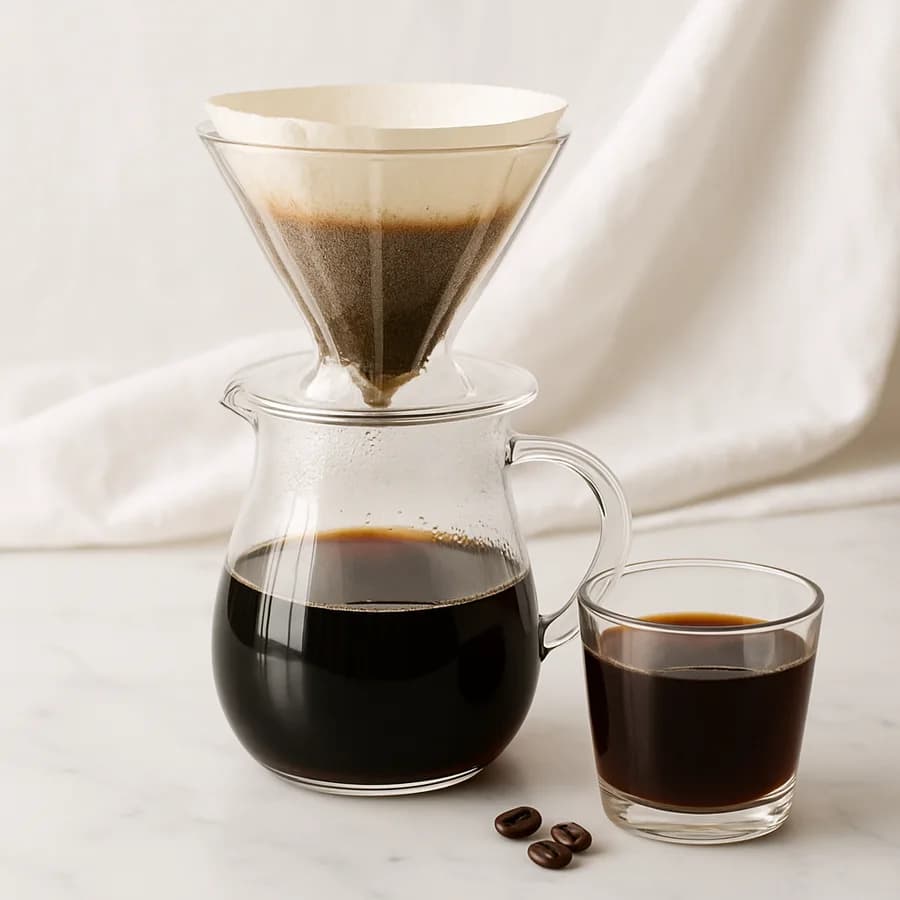
- Serves
- 1 (11 oz)
- Time
- 3.5 min
- Skill
- Medium
- Gear
- V60 / Kalita dripper + gooseneck kettle
Ingredients
- 20 g coffee, medium-fine
- 320 g water at 92–96°C / 198–205°F
- Paper filter + dripper
Method
- 1
Rinse the paper filter with hot water and discard the rinse water.
- 2
Add 20 g of medium-fine coffee and level the bed.
- 3
Bloom: pour 40 g of water, swirl, and wait 30–45 seconds as the coffee degasses.
- 4
Pour in slow spirals in 2–3 pours up to 320 g total, keeping the water level steady.
- 5
Aim to finish drawdown around 2:30–3:00 total.
Best results: Bloom with about twice the coffee's weight in water first — it evens out extraction and kills sourness.
Why it works
Pour-over runs a 1:16 coffee-to-water ratio (20 g to 320 g) and owes its clarity to the paper filter, which traps the oils and fine particles that make immersion coffee heavier. Because you control the flow by hand, it's the most revealing brew method there is — every adjustment to grind, pour speed, or temperature shows up in the cup, which is why cafes use it to showcase single origins.
Frequently asked
What grind size is best for pour-over?
Medium-fine, around the texture of table salt. Too coarse drains fast and tastes sour and weak; too fine chokes the filter and turns bitter. Adjust grind so total drawdown lands near 2:30–3:00.
Why bloom the coffee first?
Fresh coffee releases CO₂ that repels water and causes uneven extraction. A 30–45 second bloom with about twice the coffee's weight in water lets that gas escape so the main pour extracts evenly.
Keep brewing
Make it with Moksha
Organic, small-batch coffee — roasted fresh and shipped to your door.